

Detergent performance tests

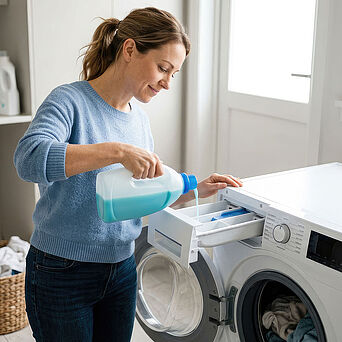
When it comes to the quality of detergents and laundry additives, one aspect is clearly paramount: do the substances ensure impeccable cleanliness?  For many decades, Hohenstein has been supporting customers from a wide range of industries in achieving, maintaining and transparently demonstrating the highest quality standards. However, the tests carried out in our well-equipped domestic laundry laboratory do not merely assess the products’ performance in terms of their cleaning efficacy. We also analyse other quality criteria that are important for optimum product performance and high customer satisfaction.

Phased testing programme

Whether it’s a quick performance test or a consumer-focused trial: our customised testing protocols provide a reliable basis for scientifically validating the quality of your products and product claims. In addition to customer-specific tests, we carry out investigations in accordance with relevant norms and standards. Real-world test conditions, state-of-the-art laboratory equipment and in-depth specialist knowledge ensure meaningful results that are highly relevant to the market and consumers.

External test reports | Standards & labels

  • Detergent Europe Test Protocol (formerly A.I.S.E.)
    Minimum requirements for comparative detergent tests
  • IKW Recommendations on Quality Assessment
    Revised recommendations on quality assessment for household detergents (from the IKW ‘EQ Detergents’ working group); aligned with European test procedures and taking current consumer behaviour into account
  • EU Ecolabel Test Protocol
    ‘Fitness for Use’ testing as a key requirement for obtaining environmental labels such as the EU Ecolabel or the Blue Angel

Hohenstein | inhouse testing methods

  • BlueTex 10
    Quick, simple screening test; assessment of washing performance on fresh natural stains; suitable for consumer-oriented screening in early development phases
  • BlueTex 100
    Standard comparison for high-performance market products; assessment of washing performance on fresh natural stains; enables benchmark testing in tendering procedures and provides the basis for objective, statistically validated product comparisons
  • Extended consumer-oriented test
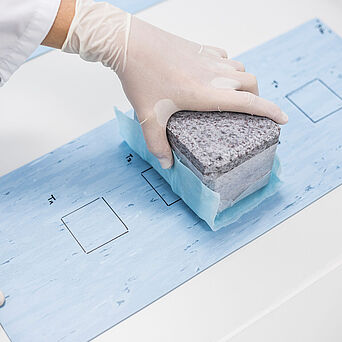
    Practical washing and wear tests under real-life conditions, assessing various aspects of washing performance, with visual evaluation by a trained panel of experts

Testing options for each product

These tests are particularly suitable for heavy-duty, colour-safe, delicate and specialist detergents (powders, single-use laundry products or liquid products), fabric conditioners, stain removers, and colour catcher sheets. Depending on the product, different test methods are prioritised:

Heavy duty detergents

Heavy duty detergents

Typical test criteria:

  • Stain removal performance
  • Whiteness retention/greying
  • Cleaning performance (as part of a wear-and-wash test)
  • Tensile strength change in accordance with DIN EN 13934

Colour detergents

Colour detergents

Typical test criteria:

  • Stain removal performance
  • Colour maintenance (instrumental in accordance with DIN EN ISO 105-A05 or visual in accordance with ISO 105-A02)
  • Dye transfer inhibition (Lini test/washing machine; indication of colour bleeding in accordance with DIN EN ISO 105-A04)
  • Surface preservation in accordance with DIN EN ISO 12945-4
  • Fabric care
  • Tensile strength change in accordance with DIN EN 13934
Light duty detergents

Light duty detergents

Typical test criteria:

  • Stain removal performance on delicate fabrics
  • Colour maintenance (measured instrumentally in accordance with DIN EN ISO 105-A05 or visually in accordance with ISO 105-A02)
  • Dye transfer inhibition (Lini test/washing machine; indication of colour bleeding in accordance with DIN EN ISO 105-A04)
  • Surface retention in accordance with DIN EN ISO 12945-4
  • Fabric care
  • Tensile strength change in accordance with DIN EN 13934
Special detergents

Special detergents

(Sports laundry detergent, detergent for technical fabrics, mild detergent)

Typical test criteria:

  • Stain-removal performance
  • Odour-reducing effect
  • Membrane preservation after washing (water repellency in accordance with DIN EN ISO 4920, breathability in accordance with DIN EN ISO 11092)
  • Biological tests on the tolerability of washed materials (cytotoxicity testing in accordance with DIN EN ISO 10993-5, in vitro testing for skin sensitisation)
Stain Removers / Stain-Removing Salts / Pre-Treatment Products

Stain Removers / Stain-Removing Salts / Pre-Treatment Products

(Laundry Aids)

Typical test criteria:

  • Stain-removal performance in a direct comparison with and without pre-treatment
  • Effect on stubborn stains
  • Colour maintenance (measured instrumentally according to DIN EN ISO 105-A05 or visually according to ISO 105-A02)
  • Fabric care
Colour catcher sheets

Colour catcher sheets

(Laundry Aids)

Typical test criteria:

  • Prevention of colour transfer in the washing machine
  • Dirt-binding capacity during the wash cycle (graying)

Claim testing – reliably verifying product claims

Would you like to objectively demonstrate your product’s performance and provide sound evidence to back up your marketing claims?

Our claim tests provide reliable comparative data under real-world conditions and lay the foundation for compelling communication and well-informed purchasing decisions.

Readability, clarity and user-friendliness of package information

Clear and understandable information promotes correct use and builds trust in your product. Through our consumer panel studies, we assess how clearly, comprehensibly and user-friendly the information on your packaging is perceived by your target groups.

Under realistic conditions, consumers test the legibility and comprehensibility of usage instructions, dosage recommendations, safety warnings and product claims. This provides you with valuable insights into user perception and enables you to identify areas for improvement even before the product is launched.

In addition, participants assess the handling and user-friendliness of dosing aids, such as dosing caps and measuring cups.

Malodour tests for detergents

As well as their cleaning effectiveness, an important performance characteristic of detergents is whether, and to what extent, unwanted odours such as sweat remain in the fabrics after washing.

With our malodour tests, we are able to assess laundry detergent products – such as powders, liquid detergents or gel capsules – in terms of how effectively they reduce or completely prevent the smell of sweat.

To this end, we currently offer the following test method:

Technical odour test

  • Scope:
    Assessment of sweat odour intensity on textiles that have been washed once
  • Odour application:
    A sweat odour simulant (‘artificial sweat’) developed at Hohenstein is applied to the textile samples.
  • Assessment:
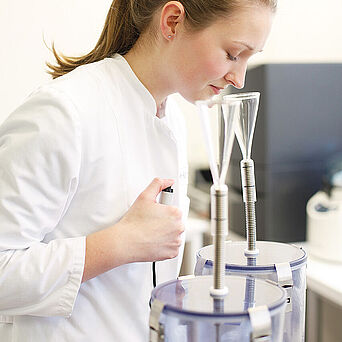
    Trained assessors evaluate the intensity of the unpleasant odour after washing using an olfactometric testing device.

Wear-and-wash trial with test subjects

  • Scope:
    Assessment of sweat odour intensity after 5 wash and wear cycles
  • Odour application:
    Garments (e.g. sports shirts) are worn by test subjects whilst carrying out an activity specific to the test.
  • Assessment:
    The intensity of sweat odour is assessed by trained odour panellists in accordance with VDI 3882 using an olfactometric sampling device and/or directly by consumer panellists.

Efficacy of household laundry disinfectants and hygienic rinsers

Where textiles contaminated with germs cannot be hygienically cleaned using high washing temperatures or common household remedies, laundry disinfectants and hygienic rinse aids help to prevent pathogens from spreading in the home, even at low temperatures of 20 to 40°.

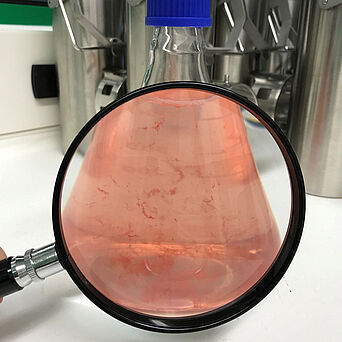
Based on the test standard DIN EN 17658, we offer a standardised test procedure with which we independently assess the disinfecting efficacy of detergents and rinse aids for domestic use. Our simulation test of a typical domestic washing cycle allows us to evaluate your product’s disinfecting performance separately for the main wash and the rinse cycle.

Furthermore, our test method is also suitable for assessing biocidal detergents in terms of their ability to prevent unpleasant odours or aesthetic impairments caused by microorganisms.

Your benefits as a client:

  • A standardised test report with detailed results
  • Objective assessment of the bactericidal and yeasticidal efficacy of the detergents used for household laundry
  • Determination and specification of the effective dose for micro-organism elimination
  • Basis for the preparation of instructions for use
  • Simulation of a domestic washing process for temperature-sensitive textiles
    (temperature range between 20 and 40°C)

Test organisms used (obligate):

  • Pseudomonas aeruginosa ATCC 15442
  • Escherichia coli ATCC 10536
  • Staphylococcus aureus ATCC 6538
  • Enterococcus hirae ATCC 10541
  • Candida albicans ATCC 10231

Optional: dermatophytes and microorganisms associated with unpleasant odours

Additional service: Washing technology assessments for formulations

In addition to the performance test, we can, on request, assess the textile compatibility of your formulation within an industrial laundry cycle – for example, fibre damage, colour change and effects on performance characteristics over several wash cycles. The focus here is on suitability for use with textiles, not on cleaning performance.